Coverage spread: 2 sources — 1 left · 1 center
Lean ratings via AllSides / Media Bias-Fact-Check. How this works.
A federal judge on Monday granted a preliminary injunction pausing Minnesota’s first-of-its-kind ban on prediction markets, just days before the law was set to take effect on Saturday. U.S. District Judge Katherine Menendez ruled that the companies and federal agencies challenging the law “have met their burden to show they are likely to succeed, at least in part,” on claims that the state statute is preempted by federal law, and that the companies would suffer irreparable harm if the ban went into effect as scheduled.
The lawsuits against Minnesota’s law were brought by the U.S. Department of Justice, the Commodity Futures Trading Commission (CFTC), and prediction-market operators Kalshi and Polymarket US. Their central argument is that federal law gives the CFTC exclusive authority to regulate event contracts traded on federally registered exchanges, meaning Minnesota cannot independently prohibit companies registered with the CFTC as designated contract markets from operating in the state. Menendez’s order specifically forbids Minnesota from enforcing the ban against any entity holding that federal registration.
What the ruling does — and doesn’t — resolve
In a footnote to her order, Judge Menendez wrote that the Minnesota statute “may not be preempted in all its applications,” but concluded the law is likely preempted in many respects. She characterized the injunction as a way to preserve the status quo while litigation over preemption and other issues continues, rather than a final resolution of the legal questions. Notably, Polymarket had also argued the law violated its First Amendment right to advertise and would disrupt what it described as a “nationally uniform market,” but Menendez said the court did not need to reach the First Amendment claims at this stage.
The ruling followed pressure from the CFTC, which had pushed for an expedited decision, initially requesting a ruling by July 17. The court declined that timeline but acknowledged at a July 2 hearing the need to act quickly. Monday’s decision came shortly after the CFTC sent a letter warning the court that it intended to escalate the matter to an appellate court if there was no response by the following day.
How Minnesota’s ban was structured and defended
Unlike some other state actions, Minnesota’s law did not penalize residents for using prediction markets directly; instead, it barred companies from operating within the state. The ban was included as part of a broader public safety bill, with lawmakers framing prediction markets as a form of gambling and therefore a public health and safety concern. Minnesota state Rep. Emily Greenman defended that framing in comments to NBC News, saying that “gambling has always been a public health and a public safety issue since states have been regulating it,” calling it an uncontested fact.
Part of a broader multistate fight
Minnesota is not alone in trying to restrict prediction markets that closely resemble sports betting or other regulated gambling activity. Arizona brought criminal charges against Kalshi in March in an effort to block transactions it viewed as mimicking sports betting, but a federal judge blocked that prosecution, similarly finding that federal law preempts the state’s gambling statutes. Nevada’s state court has also extended a temporary ban on Kalshi’s operations there. This pattern places Minnesota’s case within a wider, unsettled legal battle between state gambling regulators and federally registered prediction-market platforms.
How the coverage compares
The available reporting on this story is limited largely to NBC News, which provides the fullest account, with The Hill also covering the ruling under a similar headline; no distinct article text from The Hill was available for direct comparison beyond its headline confirming the same news of the injunction. NBC News’s account emphasizes the legal reasoning behind Menendez’s decision, the preemption argument central to the federal plaintiffs’ case, and situates Minnesota’s fight within the broader context of similar state-level battles in Arizona and Nevada. It also gives voice to the state’s defense of the ban through Rep. Greenman’s comments, providing insight into the political and public-health rationale Minnesota lawmakers used to justify the law, alongside the companies’ countervailing free-speech and market-disruption arguments.
Why it matters
The case is significant because it tests whether individual states can restrict federally regulated prediction markets — platforms where users trade contracts tied to the outcomes of elections, sports, and other events — by classifying them as gambling. A ruling that federal law preempts state gambling restrictions on CFTC-registered exchanges would significantly limit states’ ability to regulate this fast-growing industry, reinforcing a uniform national framework favored by companies like Kalshi and Polymarket. Conversely, if states like Minnesota, Arizona, and Nevada ultimately prevail in asserting their own gambling laws over these markets, prediction-market platforms could face a patchwork of state-by-state restrictions. The preliminary injunction keeps Minnesota’s ban on hold for now, but the underlying legal dispute over federal preemption remains unresolved and is likely to continue playing out in courts across multiple states.
Sources
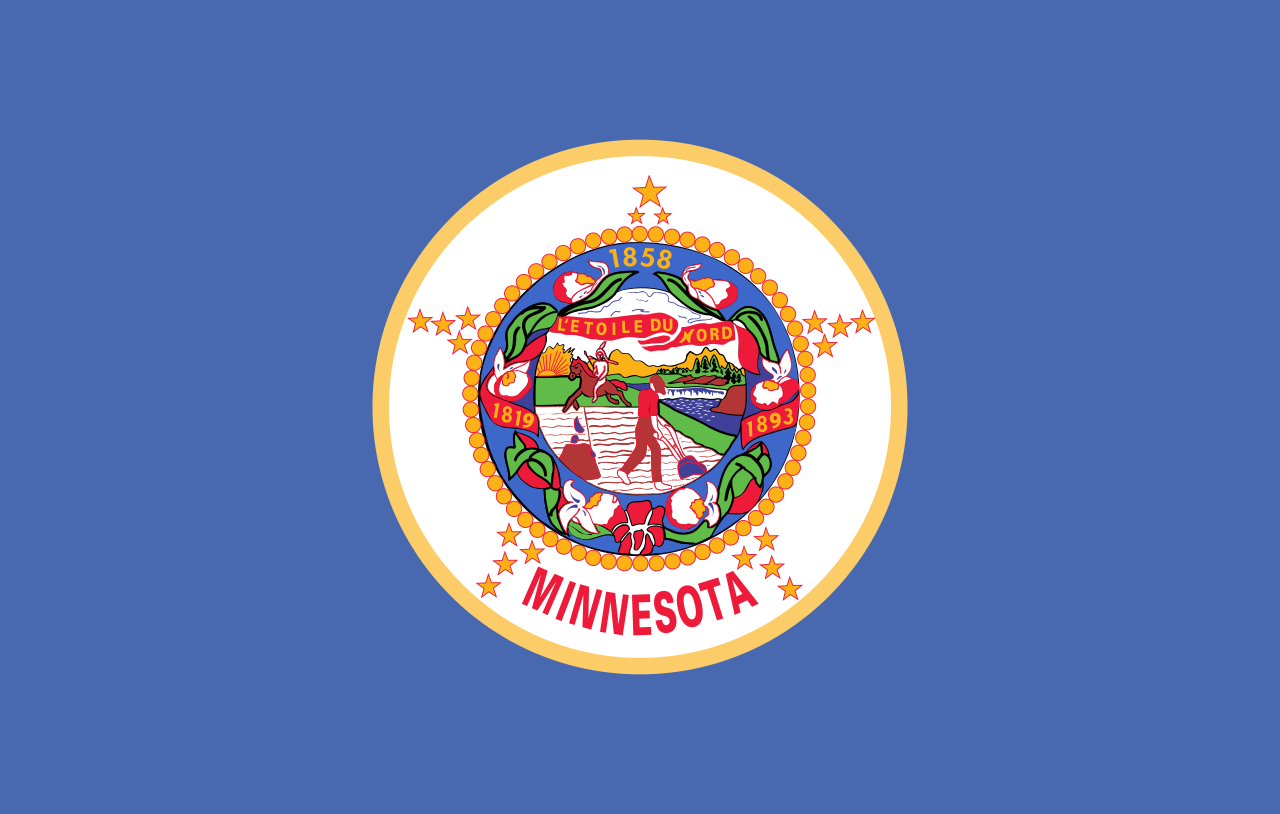
Featured photo: Original: Minnesota State Emblems Redesign Commission Vector: Jamie Eilat, Undertiago via Wikimedia Commons (Public domain)